
ZATCA Wave 25: e-invoicing for businesses above SAR 187,500 from 1 February 2027
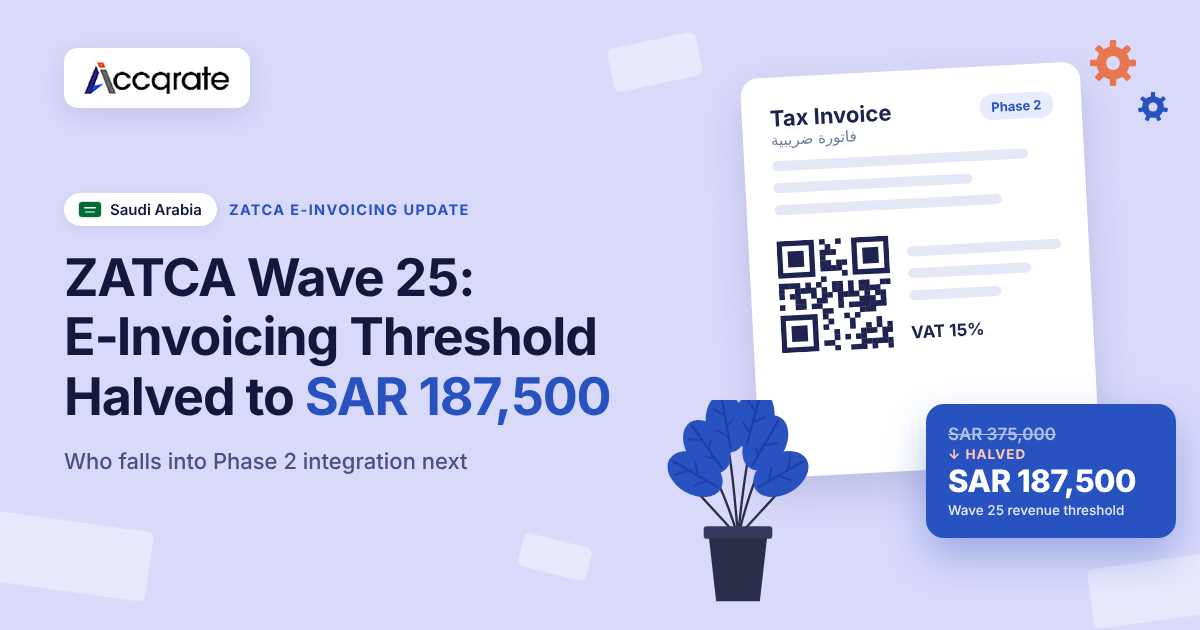
ZATCA Wave 25 is the group of Saudi taxpayers that must connect their e-invoicing systems to the FATOORA platform from 1 February 2027, covering every business whose VAT-taxable revenue exceeded SAR 187,500 in 2022, 2023, 2024 or 2025. The Zakat, Tax and Customs Authority announced the criteria on 24 July 2026, halving the SAR 375,000 threshold used for Wave 24. Because SAR 187,500 is also the VAT voluntary registration threshold, this wave reaches small shops, sole traders and service firms that have never had to integrate before. This guide explains how to check whether a business is in Wave 25, what Phase 2 integration requires, and what to prepare in the weeks before the deadline.
Key facts
- Threshold: VAT-taxable revenue above SAR 187,500 in any of 2022, 2023, 2024 or 2025.
- Integration date: 1 February 2027.
- Legal basis: ZATCA Governor's Administrative Decision No. (1448-99-238), published in the Umm Al-Qura gazette on 24 July 2026.
- Who is covered: persons registered for VAT before the decision took effect, whose revenue exceeds the threshold.
- Notification: ZATCA notifies each targeted taxpayer directly, at least six months before the integration date.
- Previous wave: Wave 24 covered revenue above SAR 375,000 in 2022, 2023 or 2024.
How to check whether your business is in Wave 25
A business is in Wave 25 if its revenue subject to VAT went above SAR 187,500 in at least one of the four years from 2022 to 2025. According to the ZATCA Wave 25 announcement, the test applies to revenue during 2022, 2023, 2024 or 2025, so one year above the line is enough.
- Take the VAT-taxable revenue for each calendar year from 2022 to 2025, using the figures reported in your VAT returns.
- Compare each year on its own with SAR 187,500. Do not add the years together.
- If any single year is above SAR 187,500, the business meets the Wave 25 criterion, even if current turnover is lower.
- If every year is at or below SAR 187,500, the business is outside Wave 25 and should watch for any later wave.
This is the first wave to include 2025 revenue. A business that crossed SAR 187,500 for the first time in 2025 is therefore in scope, while it would not have been caught by the years used for earlier waves. The history of earlier thresholds is set out in the guide to ZATCA e-invoicing Phase 2 waves.
What the official decision says
The binding text is the Governor's decision published in the official gazette, not the news release. The Umm Al-Qura gazette notice of Decision No. (1448-99-238) sets three points that matter in practice.
- It applies to persons registered with ZATCA for VAT before the decision took effect, whose revenue exceeds SAR 187,500 and who are subject to the E-Invoicing Regulation.
- From 1 February 2027, these persons must link their e-invoicing systems to ZATCA, issue electronic invoices and electronic debit and credit notes, and share the data with ZATCA.
- ZATCA will notify the persons who meet the criteria through its approved communication channels.
ZATCA's English announcement describes 1 February 2027 as the latest date for integration, while the gazette text says the obligation applies from that date. In both readings, the system should be live and tested before 1 February 2027.
What Phase 2 integration requires
Phase 2 means every invoice passes through ZATCA's FATOORA platform, either before it reaches the buyer or within 24 hours. The requirements below come from ZATCA's Detailed Guidelines for E-Invoicing, version 2 of May 2023.
- Standard tax invoices (B2B): cleared in real time. The XML goes to FATOORA first, ZATCA validates and stamps it, and only then is it shared with the buyer.
- Simplified tax invoices (B2C): not cleared, but reported to FATOORA within 24 hours of issue.
- Format: invoices are submitted to ZATCA in XML. If a PDF is sent to the buyer, it must be PDF/A-3 with the XML embedded.
- Cryptographic stamp: each invoicing unit receives a Cryptographic Stamp Identifier (CSID) from ZATCA. The solution stamps simplified invoices; ZATCA stamps tax invoices during clearance.
- Onboarding: the taxpayer logs in to the FATOORA portal with ERAD credentials, requests a one-time password (OTP) and enters it in the invoicing solution. Every device that issues invoices under the same VAT number must be onboarded.
- Integrity fields: each invoice carries a UUID, a hash of the previous invoice and a counter that cannot be reset.
- QR code: the solution generates it for simplified invoices; for tax invoices, ZATCA returns it during clearance.
Invoices cannot be edited or deleted after issue. Corrections go through a credit or debit note, which is also cleared or reported, as explained in the guide to integrating credit notes with ZATCA.
Steps to complete before 1 February 2027
About ten weeks remain between late November 2026 and the integration date. A small business can plan the work in this order.
- Confirm the revenue test for 2022 to 2025 and keep the calculation on file.
- Check the e-mail and portal channels registered with ZATCA for the Wave 25 notification.
- List every point of sale, branch device and accounting system that issues invoices, since each one must be onboarded.
- Confirm the invoicing solution supports Phase 2 clearance and reporting, CSID stamping and PDF/A-3 output.
- Onboard each unit through the FATOORA portal and send test invoices before going live.
- Set up treatment for less common documents, such as advance and prepayment invoices, before they are needed.
- Train staff that a wrong invoice is corrected with a note, never deleted or reissued under the same number.
Businesses running a large ERP have specific connection options, covered in the guides to SAP e-invoicing with ZATCA and Oracle integration with ZATCA Phase 2.
Penalties and the fines waiver
ZATCA penalises e-invoicing violations on an escalating scale rather than with a single fixed fine. Its simplified guide to VAT and e-invoicing violations, dated 30 January 2022, sets the scale for violations such as not issuing and saving invoices electronically or not following the required format.
- First violation: written alert, with up to three months to correct it.
- Second: SAR 1,000. Third: SAR 5,000. Fourth: SAR 10,000. After the fourth: SAR 40,000.
- If the same violation is not repeated within 12 months, the count starts again with an alert.
The current fines waiver does not help with these. ZATCA's extension of the Cancellation of Fines initiative, which runs to 31 December 2026, expressly excludes fines imposed under Article 45 of the VAT Law. An older overview of ZATCA fines and penalty exemptions gives background on how these initiatives have worked.
Frequently asked questions
Is one year above SAR 187,500 enough to be in Wave 25?
Yes. The criterion is revenue above SAR 187,500 in 2022, 2023, 2024 or 2025, so a single year above the threshold is enough. The years are not added together.
My business first passed SAR 187,500 in 2025. Am I included?
Yes, if the business was registered for VAT before the decision took effect on 24 July 2026. Wave 25 is the first wave that counts 2025 revenue.
What if ZATCA has not sent me a notification?
ZATCA has said it will notify every targeted taxpayer. If no notification has arrived but the revenue test is met, check the contact details registered with ZATCA and confirm the position with ZATCA directly rather than waiting.
Do simplified (B2C) invoices need clearance?
No. Simplified tax invoices are reported to FATOORA within 24 hours of issue. Only standard tax invoices, and their related notes, need real-time clearance.
Does the fines waiver ending on 31 December 2026 cover e-invoicing penalties?
Not those imposed under Article 45 of the VAT Law, which the initiative expressly excludes. Integration should not be delayed on the assumption that later fines will be waived.
Can a business go live before 1 February 2027?
Yes. Integrating early leaves time to fix onboarding or data problems before the obligation applies, and the steps are the same.
This article summarises ZATCA's published rules as of 23 November 2026 for general information. It is not tax advice; refer to ZATCA or a qualified adviser for a specific case.


cta.title1
cta.description1cta.description2 cta.badge2cta.badge3
Recent Blog Posts from Accqrate
Integrating Credit Notes with ZATCA: A Comprehensive Guide
Integration of Debit Memos with ZATCA: An In-Depth Overview
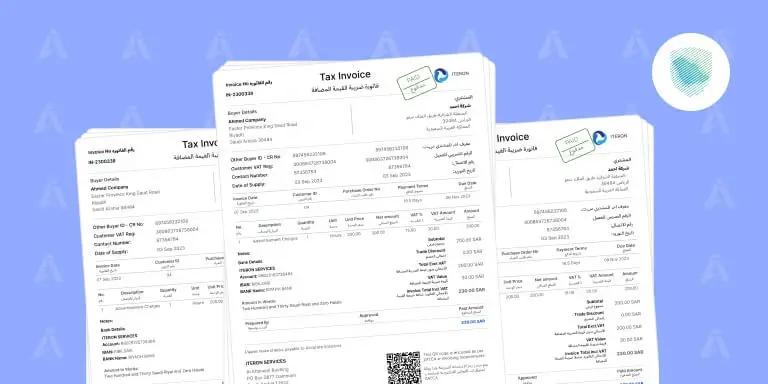
Understanding ZATCA E-Invoicing Phase 2 Waves in Saudi Arabia