E-Invoicing and E-Procurement in Qatar: A Practical Guide for Businesses
Electronic invoicing is often described simply as a digital replacement for paper documents, but its real value lies in how it reshapes procurement, payment cycles and financial oversight for businesses trading across borders. In Qatar, this shift is gaining momentum as the country lays the legal groundwork for mandatory e-invoicing, even as VAT and full enforcement remain in progress. This guide explains how e-invoicing and e-procurement function together in the Qatari market, what businesses can expect, and how to build a system that works today and scales into tomorrow's requirements.
E-Invoicing and E-Procurement Are Not the Same Thing
E-invoicing refers specifically to the structured, digital creation, transmission and storage of invoice data between a supplier and a buyer, allowing systems on both ends to read and process the document automatically rather than manually. E-procurement is broader. It covers the full digital purchasing cycle, including requisitions, purchase orders, supplier onboarding and payment reconciliation.
The two are deeply connected in a B2B or B2G context. A business that digitizes its procurement workflow but still exchanges unstructured PDF invoices creates a bottleneck at the final stage of the transaction. Conversely, structured e-invoicing works best when it plugs into an already digitized procurement chain, since both buyer and supplier systems can validate data automatically without manual re-entry. Businesses evaluating e-invoicing in Qatar should think of it as one link in a larger digital procurement strategy rather than an isolated compliance task.
Where Qatar Stands Today
Qatar's e-invoicing landscape has evolved considerably. Electronic invoicing remains voluntary, and the country has still not brought VAT into force despite having signed the GCC VAT Framework Agreement. This means tax invoices, including electronic ones, are not yet subject to a binding regulatory regime in the way they are in Saudi Arabia or the UAE.
That said, the regulatory picture is no longer static. The General Tax Authority (GTA), operating under the Ministry of Finance, is the body actively driving Qatar's digital tax agenda, having run a pilot e-invoicing program with select large entities and secured Cabinet approval for a draft e-invoicing law and its executive regulations. This represents a meaningful shift from earlier expectations that positioned the Ministry of Economy and Commerce as the primary e-invoicing regulator. Businesses relying on older guidance should update their understanding accordingly, since the GTA and Ministry of Finance are now the relevant authorities to monitor.
No mandatory technical standard has been published. Earlier assumptions that Qatar would adopt a UN/CEFACT based invoice format have not been confirmed, and current regional signals point instead toward a structured XML approach potentially influenced by Peppol, similar to frameworks used in neighboring GCC states. Businesses should treat any specific format claim as provisional until the GTA releases official documentation.
Why E-Procurement Readiness Matters Beyond Compliance
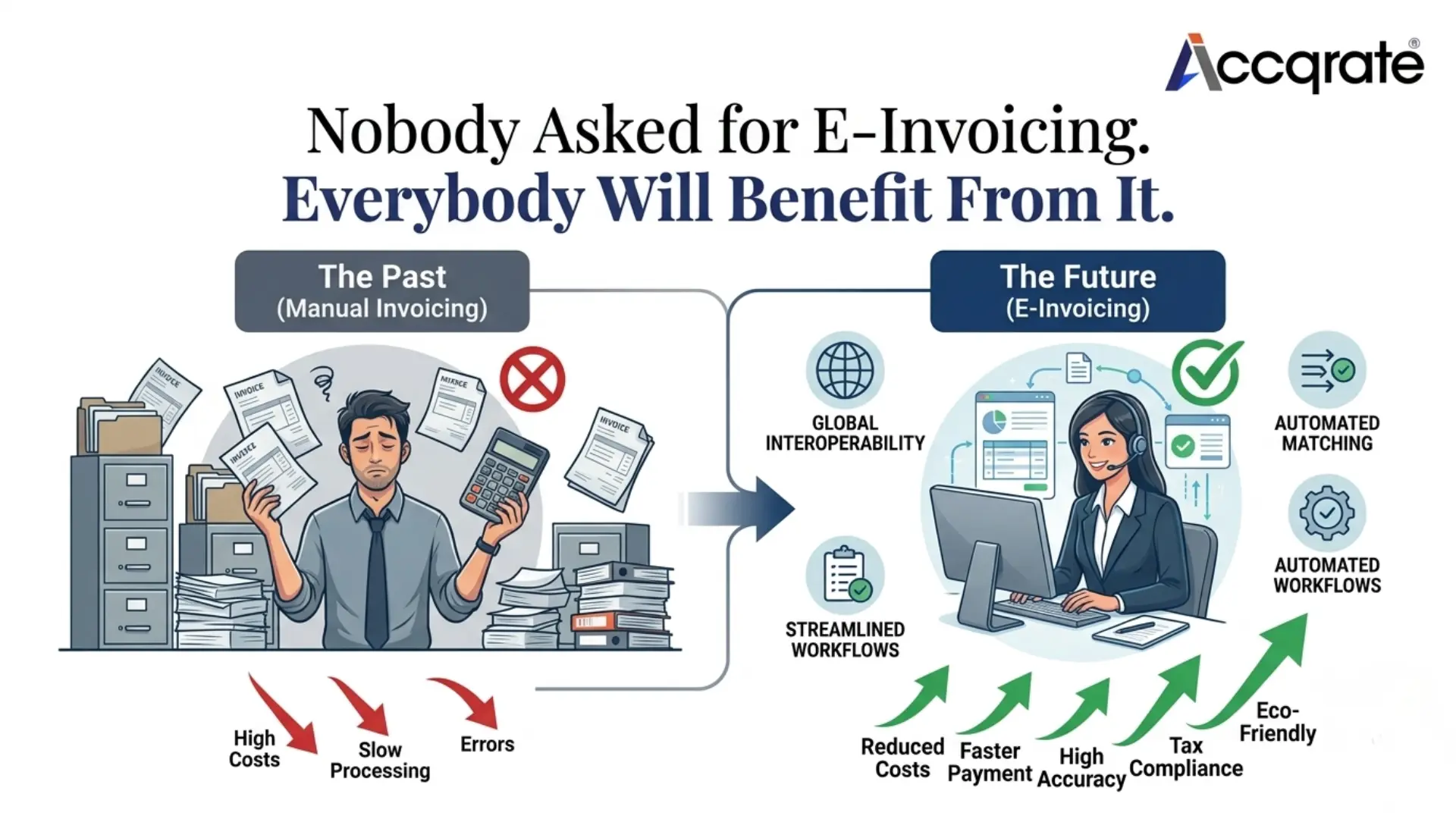
Businesses that treat e-invoicing purely as a legal obligation often miss its operational upside. For companies engaged in B2B or B2G trade in Qatar, digital invoicing and procurement integration deliver benefits that extend well past regulatory compliance.
- Faster invoice turnaround reduces the administrative lag between delivery and payment, shortening Days Sales Outstanding and improving cash flow predictability.
- Automated validation catches data errors, such as mismatched tax identification numbers or incomplete addresses, before an invoice is even submitted, reducing disputes and rework.
- Centralized digital records simplify audits by giving finance teams and auditors a searchable history of every action taken on an invoice, from creation to approval.
- Interoperable systems make it easier to transact with international partners, particularly useful for businesses with supply chains spanning multiple GCC markets.
- Reduced manual processing frees finance and procurement staff to focus on higher value analysis rather than repetitive data entry.
For businesses operating across several Gulf markets, these operational gains often justify early adoption of structured invoicing well before any Qatari mandate takes effect.
Building an E-Invoicing Strategy That Will Hold Up
Rather than waiting for the final legal framework, businesses can take a structured, phased approach to building e-invoicing readiness that will remain useful regardless of the exact technical standard Qatar ultimately adopts.
Map your current procurement and invoicing flow. Document how purchase orders are created, approved and matched against invoices today. This reveals where manual handoffs create delay or error, and clarifies what will need to change once structured invoicing becomes standard.
Evaluate supplier and customer data quality. Structured invoicing systems reject records with missing or inconsistent information. Cleaning up tax identification numbers, commercial registration details and contact information now avoids disruption later.
Select a solution built for interoperability, not just compliance. A platform that only satisfies today's voluntary requirements offers limited value. Look for solutions capable of adapting to structured XML formats, API based submission, and multi-country compliance, since many businesses operating in Qatar also transact across Saudi Arabia, the UAE and other GCC markets with more mature e-invoicing mandates already in force.
Prioritize automation over manual bridges. Automating invoice generation, validation and matching reduces the risk of human error at scale, particularly important once transaction volumes tied to mandatory reporting increase.
Build in flexibility for regulatory change. Since Qatar has not finalized its technical specifications, choose systems and internal processes that can be reconfigured rather than rebuilt when the final rules are published.
What to Look for in an E-Invoicing Solution
Given that Qatar's technical requirements are still developing, businesses should prioritize platform characteristics that reduce future rework rather than chasing premature compliance claims.
- Cloud based accessibility, so finance and procurement teams can review, approve or reject invoices from any location as workflows scale
- Genuine interoperability across formats and networks, since Qatar's eventual standard may shift between draft publication and final enactment
- Strong automation capabilities across invoice generation, data validation and payment reminders
- Scalability to accommodate business growth and expanding transaction volumes without requiring a platform change
- A track record of compliance support across multiple GCC jurisdictions, given how closely Qatar's framework is expected to follow regional precedent
Government Oversight and Enforcement
Qatar's tax administration operates through the Dhareeba portal, the GTA's centralized platform for registration, filing and payment across existing taxes such as corporate income tax and excise tax. While Dhareeba has not been officially confirmed as the future home of e-invoicing infrastructure, it represents the digital backbone the GTA is likely to build upon.
A dedicated penalty framework specific to e-invoicing non-compliance has not yet been published. Until the executive regulations define one, existing enforcement mechanisms under Qatar's Income Tax Law and Excise Tax Law remain the relevant legal backdrop for tax administration matters generally. Businesses should not assume the absence of a published e-invoicing penalty structure signals low regulatory priority. Given the pace of legislative movement over the past year, formal enforcement provisions are likely to follow soon after the mandatory timeline is confirmed.
Frequently Asked Questions
Is e-invoicing mandatory for businesses in Qatar?
Not currently. E-invoicing remains voluntary, and mandatory adoption is expected to follow once Qatar finalizes its e-invoicing law and VAT comes into force.
Which government body regulates e-invoicing in Qatar?
The General Tax Authority, working with the Ministry of Finance, is currently driving Qatar's e-invoicing framework. This differs from earlier expectations that positioned the Ministry of Economy and Commerce as the primary regulator.
What invoice format should businesses plan for?
No format has been officially confirmed. Structured XML formats, potentially influenced by Peppol standards used elsewhere in the region, are considered more likely than the UN/CEFACT based format referenced in older guidance.
Should businesses wait for the final mandate before adopting e-invoicing?
Not necessarily. Businesses trading with partners in Saudi Arabia, the UAE or other markets with mature e-invoicing mandates often benefit from early adoption, since it improves cash flow, reduces errors and prepares internal systems for Qatar's eventual requirements.
What happens if a business does not comply once e-invoicing becomes mandatory?
A dedicated e-invoicing penalty framework has not yet been published. In the interim, general tax enforcement provisions apply, and a specific structure is expected once the executive regulations are finalized.
How does e-procurement relate to e-invoicing compliance?
E-procurement digitizes the broader purchasing cycle, including purchase orders and supplier management. Businesses with digitized procurement systems generally find e-invoicing integration smoother, since structured data already exists earlier in the transaction chain.
Key Take-aways
Qatar's e-invoicing landscape has shifted meaningfully from a loosely defined, voluntary framework into one backed by an approved draft law and an active regulatory body working through the details. While the final technical standard and enforcement date remain unconfirmed, businesses that invest in interoperable, automation ready systems now will be positioned to adapt quickly once the requirements are finalized. For organizations managing compliance across multiple Gulf markets simultaneously, platforms such as Accqrate offer a way to unify e-invoicing and procurement readiness under one consistent strategy rather than reacting market by market.

cta.title1
cta.description1cta.description2 cta.badge2cta.badge3
blogs.footerTitle
Qatar's E-Invoicing Transformation: Legal Framework, Readiness Timeline and What Businesses Must Know
Qatar's Path to Electronic Invoicing: Draft Law, Regional Influences and Business Readiness
Qatar's Draft E-Invoicing Law: What Businesses Need to Know