Blogs







UAE E Invoicing for Importers and Exporters Frequently Asked Questions 2026 Updated
Explore the latest FAQs on UAE e-invoicing for importers and exporters, including compliance timelines, PINT AE requirements, Peppol integration, invoice validation, ERP readiness, record retention, cross-border transactions, and mandatory obligations ahead of the 2027 rollout.
E Invoicing in the United Arab Emirates Regulations Compliance and Benefits: A Complete Guide for 2026 and Beyond
Understand the UAE's e-invoicing framework, including the 2026–2027 implementation timeline, Peppol five-corner architecture, PINT AE requirements, ERP integration, compliance obligations, accredited service providers, and the operational benefits of structured digital invoicing.
Reverse Charge Mechanism in UAE VAT: A Comprehensive Guide
Understand the Reverse Charge Mechanism (RCM) under UAE VAT, including its legal basis, applicable transactions, reporting obligations, compliance requirements, benefits, and challenges for businesses involved in cross-border and designated sector supplies.
Understanding Whether QR Codes Are Required for E Invoicing in the UAE
Learn whether QR codes are mandatory under the UAE's e-invoicing framework, how PINT AE XML invoices are validated, the role of Accredited Service Providers, and the key compliance requirements businesses must meet before the 2027 mandate.
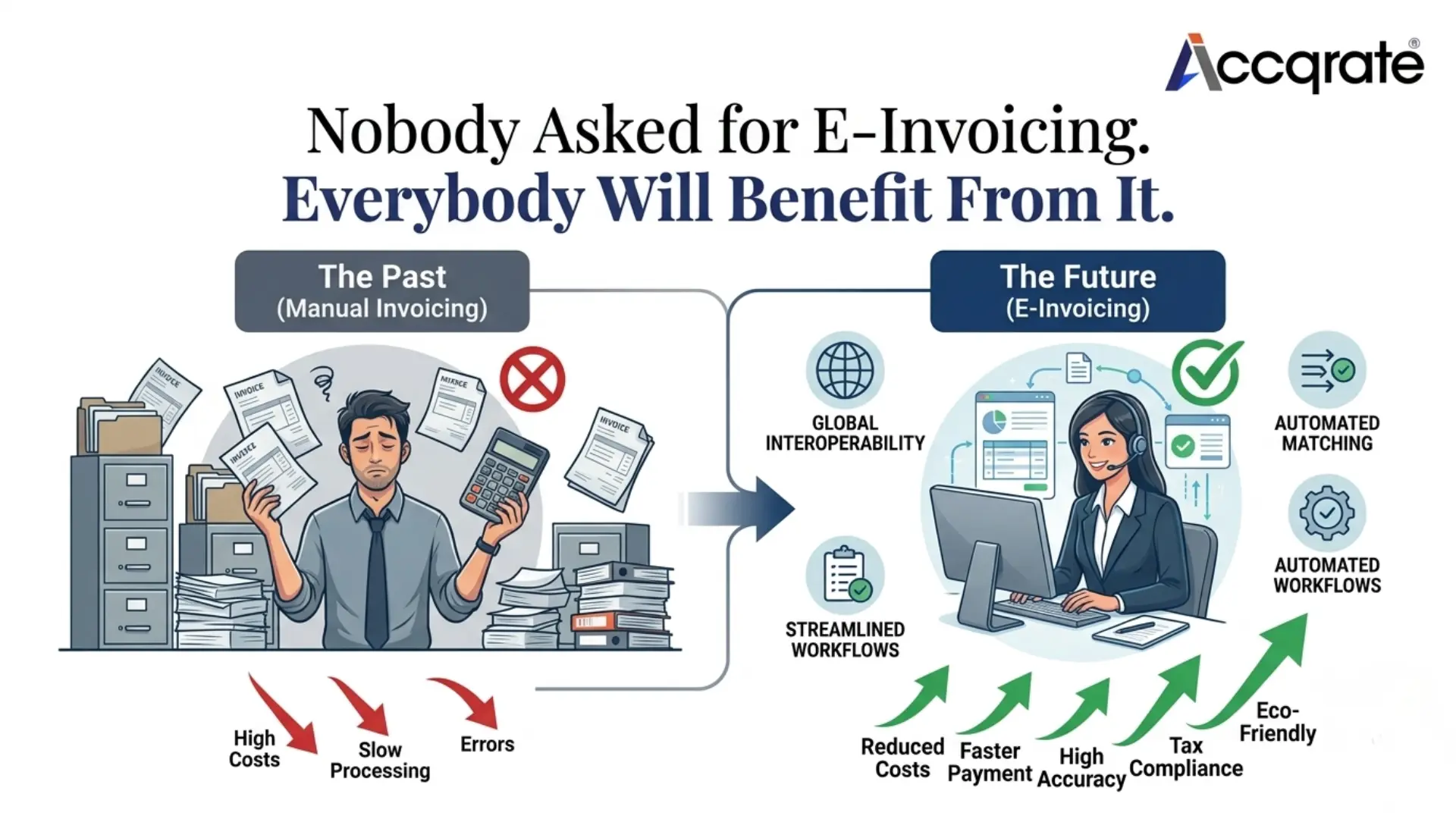
Nobody Asked for E-Invoicing. Everybody Will Benefit From It.
When governments first announced e-Invoicing mandates, most organizations viewed them as yet another compliance requirement. Finance teams saw additional work, IT teams saw integration challenges, and business leaders saw another regulatory project competing for budget and attention.
Get 100% FTA e-invoicing compliant with Accqrate
 Seamless integration with any ERP/POS
- Direct Integration & Peppol integration
- E-invoice generation in a fraction of a second